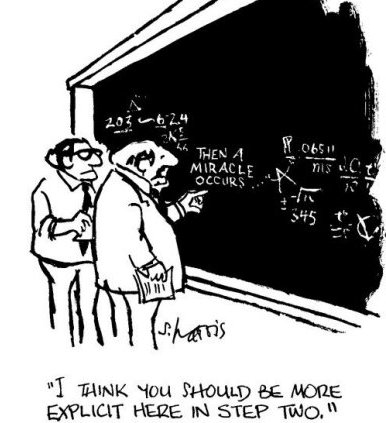
1. Do you think science
leaves room for miracles?
2. Many aspects of life are thought
of in averages [means], would it be better if we as a
society adopted median instead?
3. What credibility would you need to
believe an "extraordinary story"?
4. Venn mentions that regularities within the statistics should not be used in the casual explanation of the event. What are some examples of misconceptions that can happen in our everyday life?
4. Venn mentions that regularities within the statistics should not be used in the casual explanation of the event. What are some examples of misconceptions that can happen in our everyday life?
5. What are some
instances where the lack of having a large quantity of
data came be harmful?
6. Venn claims that
probability applies to classes not individuals. How will a
world that is becoming heavily influenced by AI, be able
to determine the risk of a situation when it is
individually determined?
7. How has
overconfidence changed or stayed the same since the 19th
century?
8. What other industries
besides health insurance would the probabilistic stability
be similar?